

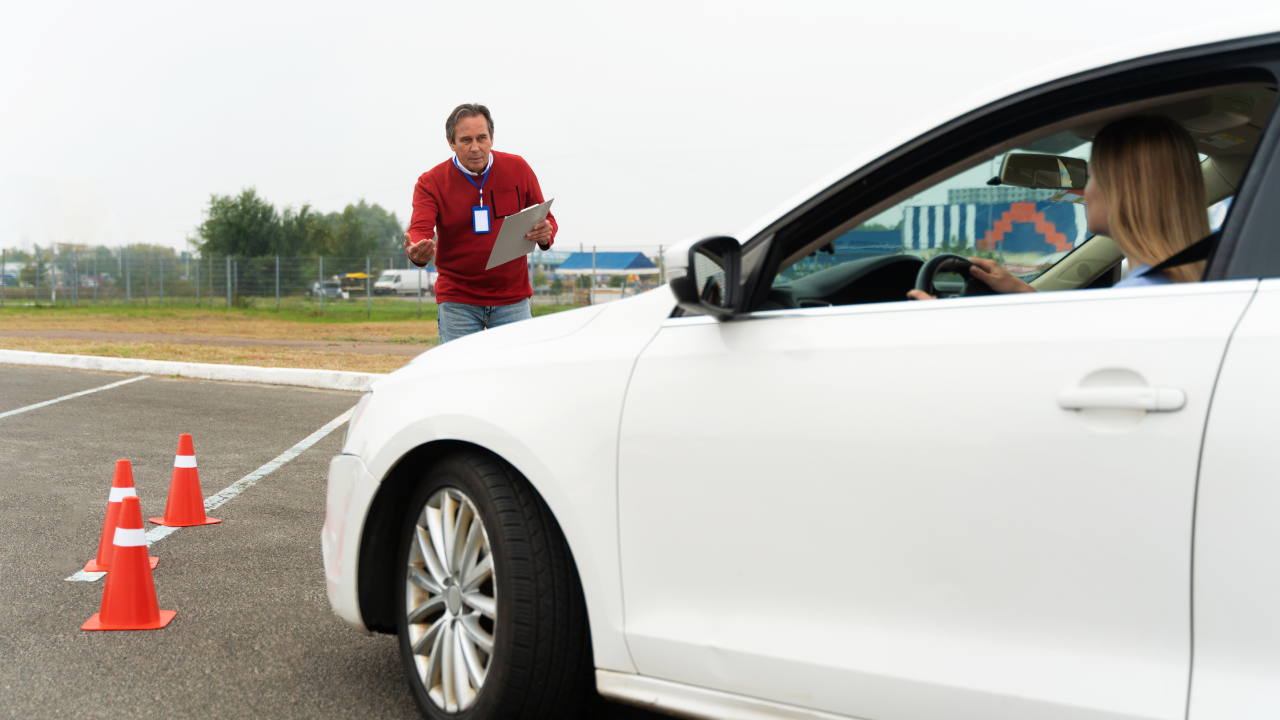
6 Road-Test Mistakes In-Car Lessons Can Help You Avoid
Are Small Driving Mistakes Putting Your Road Test at Risk?
A road test can change in seconds. One missed mirror check, a rushed lane change, or a poorly judged turn can create a problem before you even realize what happened. In-Car Lessons gives learner drivers a chance to practice these situations before sitting behind the wheel for an Ontario road test. Instead of discovering weak habits during the assessment, you can work on them during regular driving practice.
For many learners, the greatest challenge is not knowing what a traffic sign means. The greatest challenge is remembering multiple things at once while the vehicle is moving.
Are your mirrors checked? Is the signal on? Is the blind spot clear? Is your speed appropriate? Is another vehicle approaching?
That is where structured practice can make a difference.
Why Small Road-Test Mistakes Can Cause Big Problems
A road test involves much more than steering, accelerating, and braking. You must show that you can drive while watching traffic and reacting to the road.
That can include:
- Checking mirrors regularly
- Checking blind spots when appropriate
- Maintaining lane position
- Following traffic signs and signals
- Controlling speed
- Watching pedestrians and cyclists
- Making safe turns
- Communicating with other road users
- Making decisions based on changing traffic conditions
Here’s where things can go wrong.
A learner may know the correct procedure while sitting in a classroom or studying at home, yet forget part of that procedure once traffic becomes busy. Classroom knowledge and actual vehicle practice are two different situations.
In-Car Lessons let learners practice those actions while operating a vehicle. A driving instructor can watch what happens in real time, identify habits, and explain what needs to change.
The goal is not to predict every event on test day. It is to build familiarity with the skills that road tests assess.
6 Road-Test Mistakes In-Car Lessons Can Help You Avoid
A learner can make dozens of small errors while practicing. Six areas deserve particular attention because they involve observation, control, positioning, and decision-making.
1. Forgetting Mirror and Blind-Spot Checks
The road ahead can grab your attention so completely that mirrors become an afterthought.
That is a problem because driving requires awareness of what is happening around the entire vehicle, not just directly ahead.
Mirror checks can help you monitor surrounding traffic. When your vehicle’s position changes and the mirrors alone cannot reveal the areas beside or behind it, blind-spot checks become crucial.
A learner might approach a lane change correctly but forget the final observation step. Another driver may appear beside the vehicle at exactly the wrong moment.
This is one reason repeated In-Car Lessons can be useful. You can practice incorporating observation into your normal driving routine instead of just being told to check your mirrors.
Picture a Richmond Hill intersection with several vehicles moving through different lanes. Your attention needs to move between the road ahead, mirrors, surrounding traffic, signs, and pedestrians.
The warning sign is simple: if you regularly need someone beside you to remind you to check, that habit needs more practice.
2. Changing Lanes Without Enough Preparation
A lane change may look simple from the passenger seat.
Behind the wheel, several actions need to happen in the correct order.
You need to:
- Inspect your mirrors.
- Signal your intention.
- Check the area beside the vehicle.
- Assess the traffic gap.
- Move only when the situation allows.
- Maintain control of the vehicle.
- Cancel the signal when appropriate.
Here’s where a rushed decision can create trouble.
A learner may see an opening and immediately steer toward it. Another driver may already be moving into the same space. Sudden steering can also affect lane position.
During in-car driving practice, learners can repeat the sequence until each step becomes familiar. A driving instructor can also point out whether the learner is checking too early, signalling too late, moving too abruptly, or choosing a gap that is too small.
The aim is not to memorize one particular lane change. It is to learn how to assess the situation and act when conditions allow.
3. Taking Turns Too Quickly
A turn can look entirely different from the driver’s seat than it does from the sidewalk.
A learner approaching a right turn may need to watch for pedestrians, cyclists, parked vehicles, traffic signals, and the position of the vehicle itself.
Left turns can require attention to oncoming traffic, pedestrians, lane markings, and the space available after the turn.
The mistake many learners overlook is speed.
Entering a turn too quickly can make steering and observation harder. Going too slowly without a reason can also interfere with traffic flow.
During In-Car Lessons, learners can practise approaching turns with controlled speed, checking the relevant areas, positioning the vehicle, and completing the manoeuvre smoothly.
A useful question to ask yourself is, “Have I checked the situation before committing to the turn?”
That pause matters.
4. Poor Speed Control
Speed control is not simply a matter of looking at the speedometer and staying below the posted limit.
Road conditions can change quickly.
You may need to adjust your speed when approaching an intersection, entering a residential area, navigating a curve, dealing with congestion, or responding to pedestrians and cyclists.
Following distance also matters. If traffic ahead slows, you need enough space and time to respond without harsh braking.
A learner may begin a practice session at an appropriate speed but gradually accelerate without noticing. Another learner may brake sharply before every intersection because they waited too long to reduce speed.
This is where practice matters.
A driving instructor can point out when speed changes are happening and explain how the learner can make adjustments earlier. Repeated driving practice can also help learners become more aware of how speed feels in different situations.
The key is not to drive at one fixed speed everywhere. It is to match vehicle speed to the road, traffic, signs, and surrounding conditions.
5. Weak Observation at Intersections
Intersections can become information overload for new drivers.
There may be traffic approaching from several directions, pedestrians waiting to cross, cyclists nearby, signs to read, lane markings to follow, and vehicles preparing to turn.
One small detail can change the situation.
A learner who focuses only on the vehicle directly ahead may miss a pedestrian entering a crossing. Another driver may watch traffic but fail to notice a sign affecting the movement ahead.
During road-test preparation, learners can practise scanning the area before proceeding.
That means paying attention to:
- Traffic approaching from different directions
- Pedestrians
- Cyclists
- Signs
- Traffic signals
- Lane markings
- Vehicles preparing to turn
- Changes in traffic flow
For example, imagine approaching a busy Richmond Hill intersection. The light is changing, a vehicle is waiting to turn, and a pedestrian is near the crossing.
The correct response depends on what is actually happening around you.
That is why observation needs to become an active driving habit rather than something you remember only because a test is approaching.
6. Poor Parking and Vehicle Positioning
Parking can expose gaps in vehicle control rapidly.
Parallel parking, reversing, alignment, spacing, and steering all require awareness of where the vehicle is in relation to nearby objects.
A learner may know the basic steps but still struggle with judging distance.
Is the vehicle too close to the curb? Is the front end positioned correctly? Is there enough room behind the vehicle? Have you checked the surrounding area before reversing?
These questions become easier to address when learners practise them repeatedly.
During In-Car Lessons, a learner can work through parking manoeuvres and receive immediate feedback on steering, spacing, observation, and vehicle position.
The goal is not to make every parking attempt identical. Real roads are rarely identical. Instead, learners can become more familiar with judging space and controlling the vehicle during different parking situations.
How In-Car Lessons Prepare Learners for Road-Test Situations
Practical driving sessions can connect traffic rules with what actually happens behind the wheel.
Observation Practice
A learner can practise checking mirrors, monitoring blind spots, reading signs, watching pedestrians, noticing cyclists, and scanning the surrounding traffic.
These habits matter because drivers rarely have only one thing to watch.
Vehicle Control
Steering, braking, acceleration, lane positioning, and turning all require coordination.
A learner may understand each action separately but still need practice combining them while traffic is moving.
Road-Test Simulation
A driving instructor can create practice situations that resemble the types of tasks a learner may need to demonstrate during a driving assessment.
This can include turns, lane changes, parking, observation, speed control, and vehicle positioning.
Simulation does not mean predicting the exact test route. It means practicing the underlying skills.
Error Identification
Some driving habits are difficult to notice from the driver’s seat.
You may believe you checked a mirror at the right time, only to discover that the check was too brief or happened after the vehicle had already started moving.
Instructor feedback can highlight these details in real-time.
Repeated Practice
If parallel parking causes problems, practice parallel parking.
If lane changes create hesitation, work on lane changes.
If intersections cause confusion, spend time working through different intersection scenarios.
Repeating a difficult skill gives you more opportunities to correct the process instead of simply hoping the problem disappears.
The Warning Signs You May Need More Driving Practice
Certain habits can tell you that more practice may be useful before your road test.
- You frequently forget mirror checks.
- You feel rushed at intersections.
- Lane changes make you uncomfortable.
- Parking takes several attempts.
- You struggle to judge vehicle spacing.
- You often need reminders about signalling.
- Your speed changes without you noticing.
- You have difficulty maintaining consistent lane position.
These signs do not prevent improvement.
They simply show where your practice time may be more useful.
Identifying these issues before the road test gives you time to work on them rather than discovering them during the assessment.
Common Mistakes Learners Make Before a Road Test
Some learners make the mistake of practicing only what feels easy.
That can create a false sense of readiness.
If parallel parking is difficult, avoiding it does not solve the problem. If busy intersections create stress, driving only on quiet streets gives you fewer opportunities to work on observation and decision-making.
Other common preparation mistakes include:
- Practicing only familiar roads
- Avoiding difficult manoeuvres
- Driving without reviewing feedback
- Waiting until the final days to practice
- Focusing too much on memorising routes
- Ignoring mirror and observation habits
- Repeating mistakes without correcting them
- Assuming familiarity with one vehicle means every skill is ready
A more useful approach is to make each practice session purposeful.
Choose one or two areas that need work. Practise them. Listen to feedback. Then repeat the skill under different road conditions when appropriate.
That process can make your driving practice more focused.
Road-Test Preparation in Richmond Hill
Learners preparing for an Ontario road test in Richmond Hill should avoid relying on one familiar stretch of road.
Driving conditions can vary across the community. You may encounter busy intersections, residential streets, commercial areas, changing traffic volumes, turning situations, parking challenges, pedestrians, and cyclists.
That variety matters.
If you only practice on a quiet road, a busier environment may feel unfamiliar. If you only practice one parking situation, another setting may require different positioning.
In-Car Lessons in Richmond Hill can be used to work through different road environments while focusing on the core skills required for safe driving.
There is also an important distinction between knowing a route and knowing how to drive.
A familiar route may reduce uncertainty, but traffic conditions can change. Vehicles move, pedestrians appear, cyclists travel through intersections, and road conditions vary.
Building adaptable driving habits is more useful than relying solely on route memory.
How to Make Your Driving Practice Count?
More driving time does not automatically mean more productive practice.
Try these steps:
- Practice the manoeuvres that cause the most difficulty.
- Ask for direct feedback after challenging situations.
- Repeat mistakes using the correct sequence.
- Keep observation habits consistent.
- Work on smooth steering, braking, and acceleration.
- Practice in different traffic conditions when appropriate.
- Review road signs and traffic rules alongside vehicle practice.
- Avoid putting every practice session into the final few days.
- Assign each session a clear skill to work on.
You can also keep a simple list of recurring issues.
For example:
Session 1: Forgot blind-spot checks during lane changes.
Session 2: Improved lane-change observation but rushed two turns.
Session 3: Worked on turn speed and intersection scanning.
This gives your practice a clear direction.
Instead of asking, “Am I ready yet?” you can ask, “Which driving skill needs attention today?”
FAQs
How can In-Car Lessons help with road test preparation?
Practical sessions let learners work on vehicle control, observation, manoeuvres, lane changes, turns, parking, speed control, and traffic awareness while driving.
A driving instructor can also identify habits that may not be obvious to the learner.
The number and frequency of sessions depend on the learner’s current abilities and the areas that need more practice.
How many driving lessons should I take before my road test?
There is no single number that applies to every learner.
The amount of practice needed can depend on your current driving skills, how often you practice, how comfortable you are with vehicle control, and which areas still need work.
Someone who drives regularly may need a different practice schedule from someone who rarely gets behind the wheel.
The more useful question is whether your practice sessions are addressing the skills you still find difficult.
What mistakes can cause problems during a road test?
Common concerns include poor observation, missed signals, incorrect lane positioning, unsuitable speed, rushed turns, parking errors, and failing to follow traffic rules.
The exact circumstances matter.
For example, forgetting a mirror inspection during a lane change is different from missing a mirror check when there is no change in vehicle position.
That is why learners should practice complete driving sequences rather than isolated actions.
Should I drive the same way I did on my road test?
Route familiarity can help you know what types of roads are nearby, but relying on only one route is not a strong preparation strategy.
Traffic conditions can change, and road-test situations may require you to demonstrate skills in different settings.
Practise on residential roads, intersections, commercial areas, parking situations, and roads with different traffic volumes when appropriate.
Can a driving instructor help identify mistakes I do not notice?
Yes. An instructor observes your driving from a different angle and can spot habits you may miss while focusing on traffic.
For example, you might check your mirrors but do so too late. You might signal correctly but begin steering before completing your observation.
Feedback can help you identify these small details and practice them again.
Where can I find driving lessons in Richmond Hill?
If you are looking for a driving school in Richmond Hill, you can contact Acorn Drivers Academy to discuss driving lessons and road-test preparation.
The school is located at: 140 Regatta Ave, Richmond Hill, ON L4E 4R2, Canada
You can also call: +1 416-629-5800
Ask about the driving practice that fits your current skill level and road-test preparation needs.
Moving Forward
Road-test preparation is not only about remembering traffic rules.
You also need repeated practice with observation, vehicle control, lane positioning, turns, lane changes, parking, speed control, and decision-making.
A small mistake may happen because you forgot one step, rushed a decision, or focused too narrowly on what was directly ahead.
The useful question is not whether you can avoid every possible mistake. No practice can guarantee that.
Instead, focus on identifying the habits that need work and using your driving sessions to address them before the assessment.
If you are preparing for an Ontario road test in Richmond Hill, In-Car Lessons can give you time behind the wheel to practise the skills that matter in real traffic situations.
Address: 140 Regatta Ave, Richmond Hill, ON L4E 4R2, Canada
Call Acorn Drivers Academy at +1 416-629-5800 to discuss your driving lesson needs in Richmond Hill.